Written by Spring Valley Turkey Farm
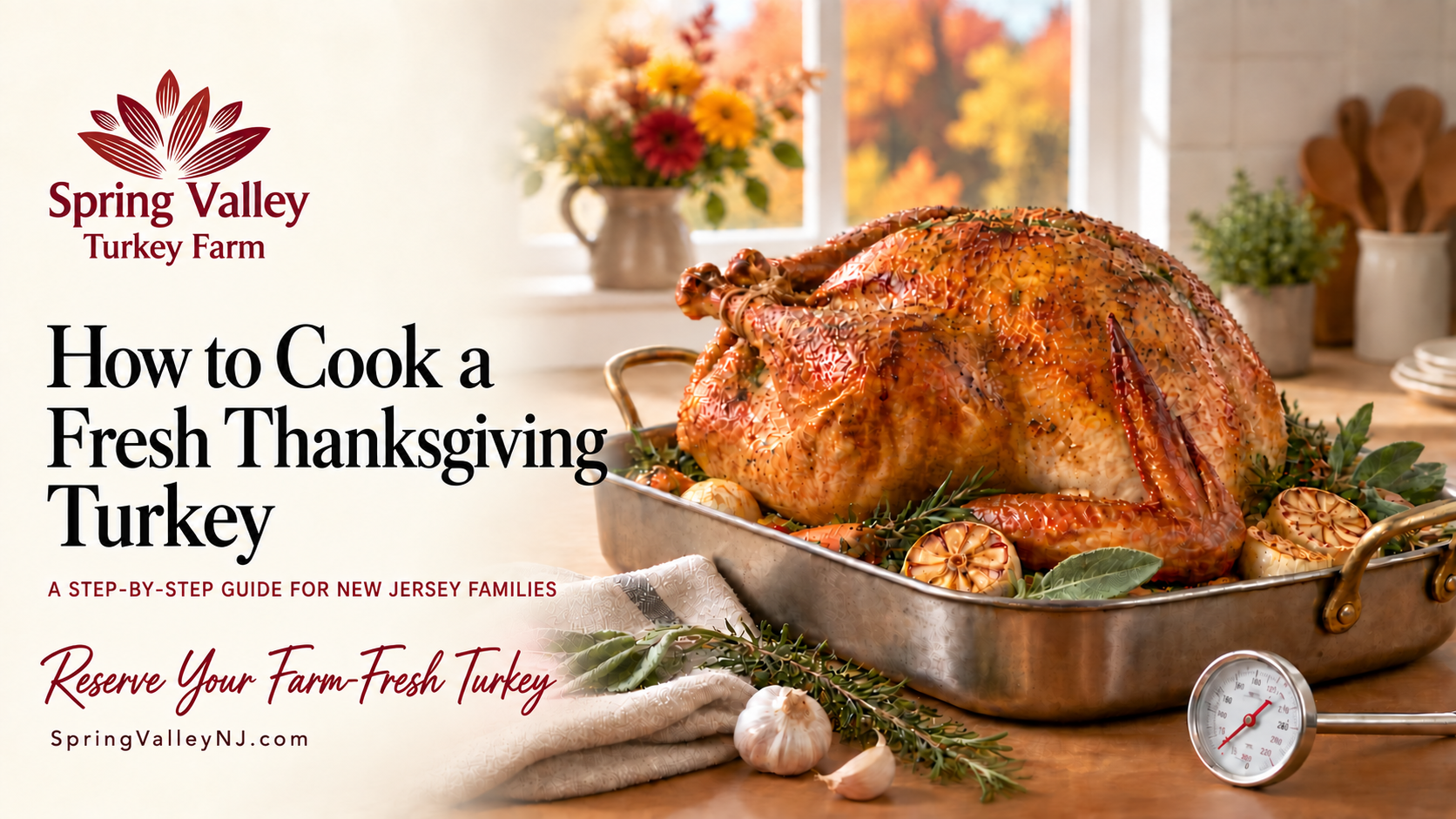
When a fresh Thanksgiving turkey is the centerpiece of your holiday table, a little preparation can make all the difference. From seasoning and roasting time to checking the final temperature, knowing what to expect can help you serve a turkey that is flavorful, tender and safely cooked.
At Spring Valley Turkey Farm in Old Bridge, New Jersey, our turkeys are locally raised, processed at a nearby USDA facility shortly before Thanksgiving and sold fresh and oven-ready. Because you are starting with a fresh turkey instead of a frozen supermarket bird, you can skip the long, multi-day thawing process and focus on preparing a memorable holiday meal.
Whether you are hosting Thanksgiving in Old Bridge, East Brunswick, Monroe Township, Matawan, Marlboro, Manalapan, Freehold, Sayreville or traveling from Staten Island, this step-by-step guide will help you confidently prepare and cook your fresh Thanksgiving turkey.
What Is Different About Cooking a Fresh Turkey?
A fresh turkey is handled differently from a fully frozen turkey before it reaches your oven. Under the USDA definition for fresh poultry, poultry labeled “fresh” has never been held below 26°F.
Spring Valley turkeys are processed only days before Thanksgiving and kept deeply chilled for freshness and food safety. You may notice a small amount of ice inside the cavity or near the joints when you bring your turkey home. This is normal for a deeply chilled fresh turkey and does not mean the entire bird was frozen.
The biggest benefit for busy Thanksgiving hosts is convenience: a fresh turkey generally does not require the several days of refrigerator thawing needed for a large frozen bird. Keep it properly refrigerated, follow the instructions provided at pickup and prepare it when you are ready to cook.
What You Will Need to Cook a Fresh Thanksgiving Turkey
Gathering everything before Thanksgiving morning will make the cooking process much easier. You will need:
- A roasting pan large enough for your turkey
- A roasting rack
- Paper towels
- Butter or olive oil
- Salt and black pepper
- Your preferred herbs and seasonings
- Onion, celery, garlic, citrus or fresh herbs for aromatics, if desired
- Aluminum foil
- An accurate food thermometer
- A large cutting board or serving platter
If you reserved one of Spring Valley’s larger birds, measure your oven and roasting pan before the holiday. The turkey should fit comfortably in the pan with enough room for heat to circulate inside the oven.
Step 1: Keep Your Fresh Turkey Properly Refrigerated
After picking up your fresh turkey from our Old Bridge farm, take it home promptly and keep it refrigerated at 40°F or below. Store the wrapped turkey on a tray or inside a pan on the lowest refrigerator shelf to prevent any raw juices from dripping onto other foods.
Follow all storage and preparation instructions provided with your turkey. The USDA’s Turkey From Farm to Table guide also offers helpful information about safely handling, preparing and serving turkey.
Step 2: Prepare Your Oven and Work Area
Before handling the turkey, clear and clean your preparation area. Preheat the oven to 325°F and position the oven rack low enough to accommodate the roasting pan.
Remove the turkey from its packaging over the sink or a rimmed pan. Check both the main cavity and neck cavity, and remove the neck and giblets if they are included.
Do not rinse or wash the raw turkey. Washing poultry can spread bacteria through splashing water onto the sink, countertops, utensils and nearby food. The USDA explains why rinsing raw poultry is discouraged in its guidance on washing food and food safety.
Instead, pat the turkey dry with paper towels and discard them immediately. Wash your hands with soap and warm water, and thoroughly clean any surfaces or utensils that came in contact with the raw turkey.
Step 3: Season Your Fresh Turkey
Patting the exterior dry helps the skin brown more evenly. Rub the turkey with softened butter or olive oil, then season the outside and inside the cavity with salt, pepper and your favorite herbs.
Popular Thanksgiving seasonings include:
- Sage
- Thyme
- Rosemary
- Parsley
- Garlic
- Onion powder
- Paprika
- Black pepper
For additional flavor, you can place quartered onion, celery, garlic, lemon, apple or fresh herb sprigs loosely inside the cavity. Avoid tightly packing the cavity because air and heat need to circulate.
If you plan to brine your turkey, review the package and farm instructions first and plan ahead. Keep the turkey refrigerated throughout the brining process and use a food-safe container large enough to prevent spills or cross-contamination.
Step 4: Place the Turkey in the Roasting Pan
Set the turkey breast-side up on a rack inside the roasting pan. Tuck the wing tips underneath the bird to help prevent them from over-browning. The legs may be tied loosely with kitchen twine, but they should not be pulled so tightly that heat cannot circulate around the thighs.
Place the uncovered turkey in the preheated 325°F oven. If the skin becomes as brown as you would like before the turkey is fully cooked, loosely cover the breast with a piece of aluminum foil for the remaining roasting time.
Opening the oven repeatedly releases heat and can extend the cooking time, so limit unnecessary basting and oven-door checks.
Step 5: Estimate the Cooking Time by Weight
Turkey roasting times are estimates, not guarantees. The actual cooking time can vary based on the turkey’s weight, your oven, the roasting pan and whether the bird is stuffed.
For an unstuffed whole turkey roasted at 325°F, the USDA provides these general time ranges:
| Turkey Weight | Approximate Roasting Time |
|---|---|
| 12–14 pounds | 3–3¾ hours |
| 14–18 pounds | 3¾–4¼ hours |
| 18–20 pounds | 4¼–4½ hours |
| 20–24 pounds | 4½–5 hours |
Spring Valley turkeys are naturally growing birds, and some are larger than 24 pounds. A larger turkey will require additional cooking time, so begin early and rely on an accurate food thermometer rather than the clock alone. The USDA’s Turkey Basics: Safe Cooking guide contains additional preparation and roasting guidance.
Cooking stuffing separately in a casserole dish generally makes it easier to cook both the turkey and stuffing evenly. If you choose to stuff the turkey, prepare the stuffing immediately before cooking and make sure the center of the stuffing also reaches 165°F.
Step 6: Check the Turkey’s Internal Temperature
The safest and most reliable way to determine whether your turkey is finished is with a food thermometer. A whole turkey should reach a minimum internal temperature of 165°F.
Check the temperature in all three of these places:
- The thickest part of the breast
- The innermost part of the thigh
- The innermost part of the wing
Insert the thermometer into the thickest area without touching bone because contact with bone can produce an inaccurate reading. Do not rely only on the color of the skin, the color of the juices, cooking time or a pop-up timer.
For more information about safe temperatures for poultry and other foods, consult the federal Safe Minimum Internal Temperature Chart.
Step 7: Let the Turkey Rest Before Carving
Once the turkey has reached a safe internal temperature, remove it from the oven and place it on a sturdy cutting board or serving platter. Loosely tent it with aluminum foil and allow it to rest for approximately 20 to 30 minutes before carving.
Resting gives the juices time to redistribute throughout the meat and also makes the turkey easier to carve. Use the resting time to finish your gravy, warm side dishes and gather everyone around the table.
Common Fresh Thanksgiving Turkey Questions
Does a Fresh Turkey Need to Be Thawed?
A fresh, deeply chilled turkey does not require the long refrigerator-thawing schedule needed for a fully frozen turkey. A little ice inside the cavity or near the joints can be normal. Keep the turkey refrigerated and follow the handling instructions provided at pickup.
Should I Wash My Turkey Before Cooking It?
No. Washing raw poultry can spread bacteria around your kitchen. Pat the turkey dry with disposable paper towels instead, then wash your hands and sanitize the preparation area.
How Much Turkey Should I Order Per Person?
A useful starting point is approximately one pound of whole turkey per person, or closer to 1½ pounds per person if you want generous portions and leftovers. Our Thanksgiving turkey size guide can help you choose an appropriate weight range for your gathering.
How Soon Should Leftovers Be Refrigerated?
Refrigerate cooked turkey and other perishable foods within two hours. Divide large portions into smaller, shallow containers so they cool more quickly. USDA guidance recommends using refrigerated cooked leftovers within three to four days. Review its complete leftovers and food-safety recommendations for additional details.
Reserve a Fresh Thanksgiving Turkey in Old Bridge, NJ
A delicious Thanksgiving dinner begins with a high-quality turkey and a plan you can feel confident following. Spring Valley Turkey Farm is a family-run, veteran-owned farm located in Old Bridge, NJ, proudly serving families throughout Middlesex County, Monmouth County, Central New Jersey and Staten Island.
Our Thanksgiving turkeys are locally raised, processed at a nearby USDA facility shortly before the holiday and available for pickup at our farm. Choosing a turkey from a local New Jersey farm also helps support the agricultural businesses and communities highlighted by the New Jersey Department of Agriculture.
Whole-turkey reservations are now open for Thanksgiving 2026. Because our turkeys are raised seasonally and popular weight ranges may become limited, we recommend reserving early.
Reserve your fresh Thanksgiving turkey online, then pick it up at Spring Valley Turkey Farm, 402 Spring Valley Road, Old Bridge, NJ 08857.
For questions, call 732-970-5265 or email Turkeys@SpringValleyNJ.com.
Fresh • Locally Raised • USDA Processed • Oven-Ready